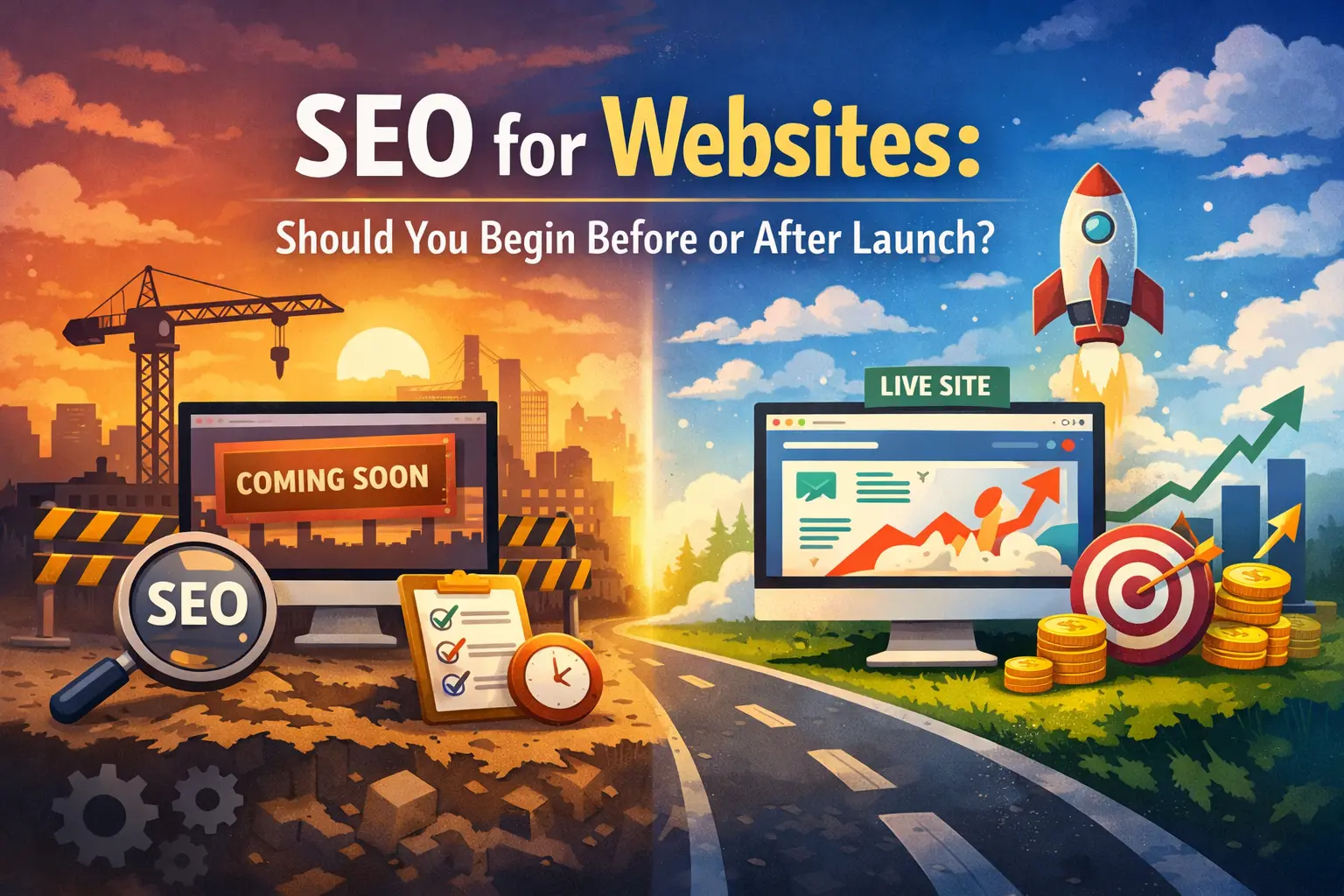
Launching a website without an SEO strategy can limit your online visibility, traffic, and long-term growth. Many businesses focus only on design and development, forgetting that search engines need proper optimization to understand and rank a website. That is why SEO for Websites should be planned carefully from the beginning.
A common question businesses ask is whether SEO should start before launching the website or after it goes live. The truth is that both stages are important, but each comes with its own advantages and challenges. Understanding the pros and cons of pre-launch and post-launch SEO can help businesses create a smarter digital marketing strategy.
SEO for Websites Before Website Launch
Starting SEO for Websites before launch means integrating search engine optimization during the website planning, design, and development phase. This approach creates a strong SEO foundation from day one.
Pros of Starting SEO Before Launch
1. Strong Website Structure
Pre-launch SEO helps create a clean website architecture with organized categories, proper navigation, and SEO-friendly URLs. This improves both user experience and search engine crawling.
For example:
- Easy-to-understand page hierarchy
- Optimized internal linking
- Better crawlability for Google bots
2. Keyword Optimization from the Beginning
Keyword research before launch allows businesses to build pages around relevant search terms naturally. Instead of rewriting content later, the website is already optimized for important keywords. This approach helps pages rank faster once the website becomes live.
3. Better Technical SEO Setup
Technical SEO is easier to implement during development than after launch. Businesses can optimize:
- Page speed
- Mobile responsiveness
- XML sitemaps
- HTTPS security
- Schema markup
- Core Web Vitals
Fixing these issues early prevents future ranking problems.
4. Faster Search Engine Indexing
A properly optimized website is more likely to get indexed quickly by Google. This means your pages can start appearing in search results sooner after launch.
5. Reduced SEO Costs Later
Fixing SEO issues after launch often requires redesigning pages, changing structures, or rewriting content. Starting early helps reduce future SEO correction costs.
Cons of Starting SEO Before Launch
1. Longer Development Process
Adding SEO during development may slightly increase the website launch timeline because keyword planning, optimization, and testing require additional work.
2. Initial Investment Can Be Higher
Businesses may need to hire SEO professionals before launch, which increases upfront costs. However, this investment usually saves money in the long run.
3. SEO Results Are Not Immediate
Even with pre-launch optimization, rankings and traffic still take time to grow because search engines need to crawl and evaluate the website.
SEO for Websites After Website Launch
Some businesses prefer to focus on SEO only after the website goes live. This approach allows them to launch quickly and optimize later based on real user data.
Pros of Starting SEO After Launch
1. Faster Website Launch
Without SEO planning during development, businesses can publish their website more quickly. This is useful for projects with tight deadlines.
2. Access to Real Performance Data
Post-launch SEO allows businesses to analyze:
- Visitor behavior
- Bounce rates
- Top-performing pages
- Conversion rates
- Keyword rankings
This data helps create more targeted SEO improvements.
3. Flexible Content Updates
After launch, businesses can continuously improve content, add blogs, create landing pages, and optimize based on market trends.
4. Easier Competitor Analysis
Businesses can study competitors after launch and adjust their SEO strategy according to market performance and search trends.
Cons of Starting SEO After Launch
1. Technical SEO Problems Become Harder to Fix
If SEO is ignored during development, businesses may face:
- Broken website structure
- Poor page speed
- Duplicate content
- Crawl errors
- Non-optimized URLs
Fixing these issues after launch can be expensive and time-consuming.
2. Delayed Search Visibility
Without early optimization, search engines may take longer to understand and rank the website. This delays organic traffic growth.
3. Content May Need Rewriting
Pages created without keyword research often require major revisions later to align with SEO best practices.
4. Higher Long-Term SEO Costs
Correcting technical issues, restructuring pages, and redesigning content after launch often costs more than implementing SEO from the start.
Which Approach Is Better for SEO for Websites?
The ideal strategy is not choosing one over the other — it is combining both approaches effectively.
Before Launch SEO Should Focus On:
- Keyword research
- Technical SEO setup
- Website structure planning
- Metadata optimization
- Mobile responsiveness
- User experience
After Launch SEO Should Focus On:
- Performance tracking
- Content marketing
- SEO audits
- Link building
- Traffic analysis
- Conversion optimization
Businesses that combine pre-launch and post-launch SEO strategies usually achieve better rankings, faster indexing, and stronger organic traffic growth.
Final Thoughts
When planning SEO for Websites, starting before launch provides a strong technical and structural foundation, while post-launch SEO helps improve performance through ongoing optimization. Ignoring either stage can limit your website’s ability to grow in search results.
Pre-launch SEO helps prevent technical mistakes and improves website readiness for search engines. On the other hand, post-launch SEO allows businesses to refine their strategy using real-world data and user behavior insights.
The most successful websites treat SEO as a continuous process rather than a one-time task. Whether you are launching a business website, portfolio, or eCommerce platform, investing in SEO before and after launch is the best way to achieve long-term online success.