
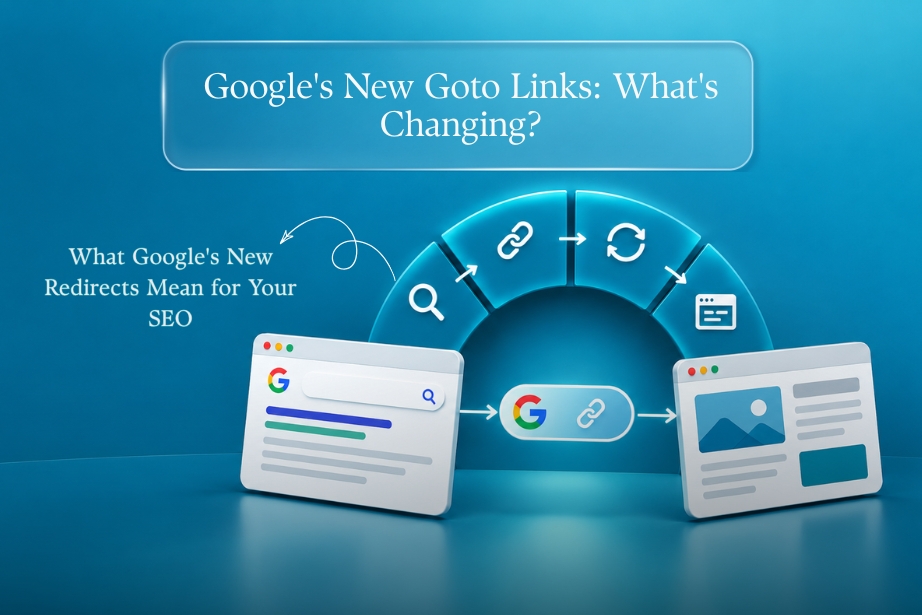





Google has introduced a technical change to the way links appear in its search results. On August 26, 2026, Google confirmed that it’s rolling out google.com/goto redirect links across search results. Instead of pointing directly to the destination website, some clickable results now route through a Google address before taking users to the same page.
For website owners, the important point is simple: this is not a ranking update. There is currently no evidence that the change affects rankings, indexing or crawling. The bigger impact is on SEO tools and rank trackers that collect and process Google’s search results at scale.
What Is Google’s goto URL Redirect?
Previously, a Google search result would generally contain the direct URL of the webpage it pointed to. SEO tools could read that URL when collecting search results.
With the new google.com/goto redirect, Google can place an intermediary URL between the search result and the destination page. When a user clicks the result, Google processes the link and then redirects the user to the actual webpage.
For everyday Google users, the experience remains largely the same. You search, click a result and reach the website you intended to visit.
The difference is more significant for software that needs to process thousands of search results automatically. Rank trackers and other SEO platforms now have an additional step when identifying the actual destination behind a result.
This makes the Google search results link change 2026 primarily a technical development rather than a change to how websites are ranked.
Why Do Google Search Links Redirect Now?
Google has said that it uses technical measures to address evolving forms of abuse and protect its services and users. It has not described the google.com/goto rollout as a ranking algorithm update.
That distinction is important for website owners.
A ranking update changes how Google evaluates websites and determines where they appear in search. This change affects the way links in those results are delivered and resolved.
In practical terms, Google has changed something behind the scenes, but there is no indication that website owners need to change their SEO setup because of it.
Google Link Redirect vs Rank Tracking: Who’s Affected?
The biggest difference is between using Google Search and measuring Google Search.
For someone conducting a normal search, very little changes. The user clicks a result and is taken to the intended website.
For rank-tracking platforms, however, the process is more complicated. These tools need to collect large volumes of search results and identify the websites and pages appearing for particular keywords. When direct URLs are replaced with google.com/goto links, tools need additional requests or processing to resolve the actual destinations.
This can increase the amount of work required to produce ranking reports. Nozzle, for example, reported that a five-page ranking report that previously required relatively few requests could require hundreds of additional requests under the new system.
SEO data providers have therefore been adapting their systems. DataForSEO reported that it could resolve direct destination URLs for 99.99% of organic SERPs through its API and subsequently released an update to resolve affected SERP elements, including AI Overviews.
What does this mean for website owners?
For most website owners, nothing needs to be changed on the website itself.
You do not need to create new redirects, change canonical tags or modify robots.txt because Google is using google.com/goto.
If you notice a change in your rankings, traffic or reporting, investigate it through your usual SEO process rather than automatically attributing it to Google’s new redirect system.
AI Search Visibility vs Google Rank Tracking
The update also highlights an important difference between AI search visibility and Google rank tracking.
Traditional rank trackers monitor Google’s search results to determine where websites appear for specific queries. Their data collection is therefore directly affected by changes to Google’s search-result structure.
AI visibility platforms can work differently. Some measure brand visibility by sending queries directly to AI platforms such as ChatGPT, Claude, Perplexity and Gemini and analysing the responses.
As a result, the google.com/goto change does not automatically affect every AI visibility platform.
There is still an important connection when AI features appear within Google itself. DataForSEO initially reported unresolved goto URLs in some AI Overview and local-pack results before updating its systems.
For brands, the broader takeaway is that Google rankings and AI search visibility are increasingly separate things to measure. Businesses may need to monitor both traditional search performance and how frequently their brand appears in AI-generated answers.
Does the Google goto Update Affect SEO Rankings?
At present, there is no evidence that the Google goto update affects SEO rankings directly.
The rollout changes how links are handled within Google’s search results. It’s not an announced change to Google’s ranking algorithm, and Google has not indicated that website owners need to change their SEO strategy because of it.
That does not mean rankings cannot change around the same time. Google continues to make other changes to Search, and individual websites can experience normal ranking fluctuations.
If your rankings move, look at your usual SEO indicators, including organic traffic, impressions, clicks and conversions, before drawing conclusions.
Sources
- Search Engine Land — Google confirms deploying goto URL redirects to search results links
https://searchengineland.com/google-confirms-deploying-goto-url-redirects-to-search-results-links-485926 - DataForSEO — Google’s Goto Rollout: We Already Resolve 99.99% of URLs
https://dataforseo.com/update/googles-goto-rollout-we-already-resolve-99-99-of-urls
Frequently Asked Questions
What is Google’s goto URL redirect?
Google’s goto URL redirect is an intermediary link structure used in its search results. Instead of sending a click directly to the destination webpage, Google can route it through a google.com/goto address before redirecting the user to the intended page.
Does the Google goto update affect SEO rankings?
There is currently no evidence that the google.com/goto rollout itself affects organic SEO rankings. It’s a technical change to search-result links rather than an announced ranking algorithm update.
Why do Google search links redirect now?
Google says it’s introducing technical measures to address evolving forms of abuse and protect its services and users. The company has not described the change as a ranking update.
Will Google goto links affect rank-tracking tools?
They can. Rank trackers need to identify the destination URLs behind Google’s search results, and the new redirect structure can make that process more resource-intensive. SEO data providers have been adapting their systems to resolve the new URLs.